

Picture this! Central bank visuals across five continents
By David Barkhausen, Gabriel Glöckler and Stefan Ruhkamp
Central banks often struggle to make themselves understood to the wider public. Visuals can help to change this. The ECB Blog travels across the globe to showcase the creative ways in which central banks communicate monetary policy.
In today’s world, a wealth of information meets with a poverty of attention. Central banks are special in many ways, but they cannot escape the laws of the attention economy. To be effective and legitimate, they, too, must find ways to get through to the people they serve.[1] And these are not just economists, bankers and financial analysts, but also the general public. Next to financial markets, it is also the average person’s economic behaviour that central banks seek to influence to preserve monetary and financial stability. But monetary policy is complex and often quite boring. Many people neither know – nor care – much about it.[2] For decades, central banks in many countries have tried to remedy the lack of financial literacy and the “rational inattention” of their populations by offering basic education on how the economy and currencies work. But now they are going one step further.
What is new is that central banks increasingly try to better explain their current monetary policy, so that people understand how the decisions of the day fit in with what they experience in the economy. Central banks do this because it makes their policy work better. Research finds that consumers’ expectations of inflation “matter just as much, if not more, than those of financial markets for the transmission of monetary policy”.[3] Central banks are also more credible if their communication is impactful and helps people better understand their policy actions and how these affect the economy.[4] To that end, central banks around the globe are increasingly using visual communications and plain language. After all, research confirms that pictures are in fact worth more than the proverbial thousand words: our brains process visuals in a matter of milliseconds. Images capture attention. They tell stories. And they might even create emotional connections that resonate across languages and cultures.[5] Illustrations, infographics, cartoons, diagrams and videos provide central bankers with invaluable tools to make themselves and their decisions better understood.[6]
Join us on a voyage around the globe to see some examples of how central bankers use visuals to get their messages across.
We first head south, far away from the ECB’s hometown of Frankfurt – to Uganda in East Africa. Since 2021 the Bank of Uganda has been publishing “Monetary Policy Statements – At a Glance”. The short visual summaries of its bimonthly decisions are paired with plain-language explanations (Figure 1). To ensure its policy messages are heard, the bank also publishes a version in Luganda, the country’s most widely spoken local language. As two out of three Ugandans work in agriculture, the visuals often include symbols of local commodities such as coffee.
Figure 1
Excerpt from Bank of Uganda’s “Monetary Policy Statement’s – At a Glance”
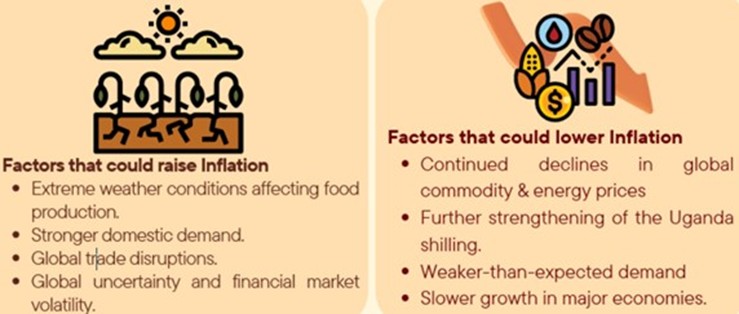
Source: “Monetary Policy Statements – At a Glance”, May 2025.
3,000 kilometers further south-west, the Bank of Namibia publishes presentations to accompany its monetary policy statements (Figure 2). The presentations cover the policy decision of the day, as well as other aspects of the current environment that matter to people, like currency issuance or the gold market.
A day’s flight east, the Bank of Japan (日本銀行or Nippon Ginkō) has embraced visuals to communicate its current policy decisions. Since 2022 it has been offering a visual, plain-language companion to its quarterly ‘Outlook for Economic Activity and Prices’. The Bank’s designers have a keen eye on what resonates most with the Japanese, for instance their shared passion for baseball (Figure 3).
Figure 3
Excerpt from the Bank of Japan’s visualised summary of the Outlook for Economic Activity and Prices
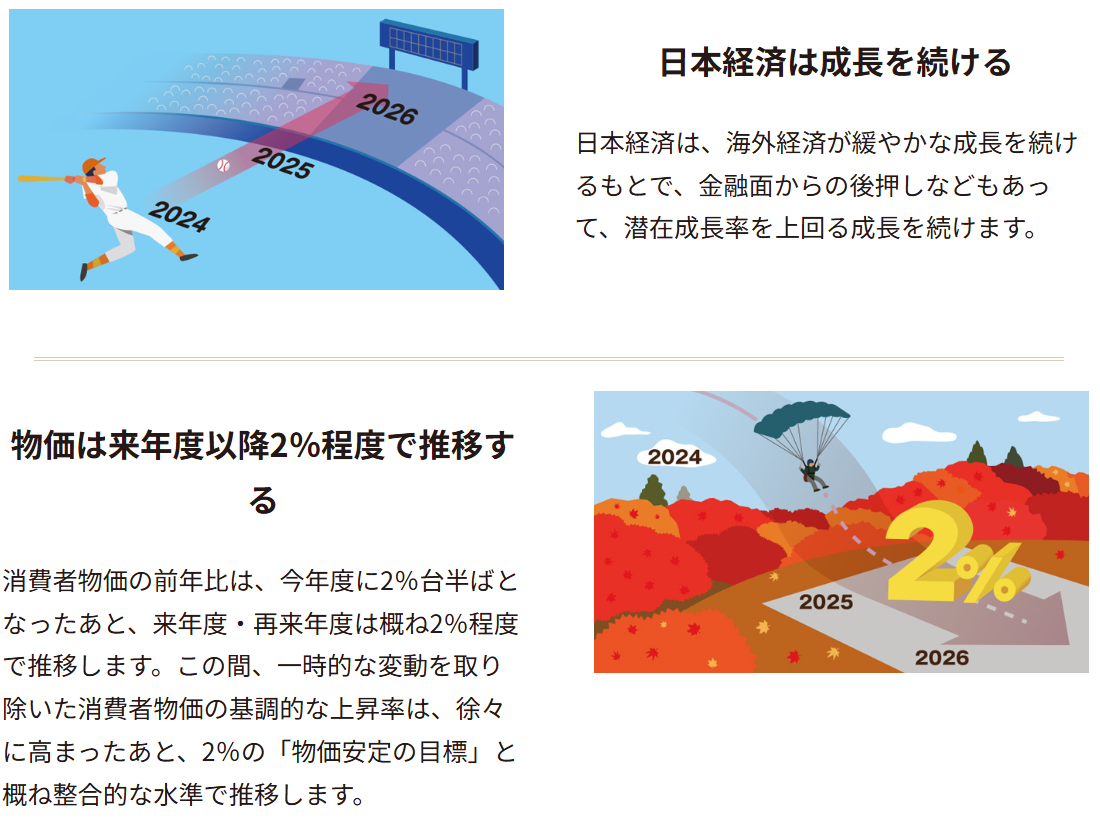
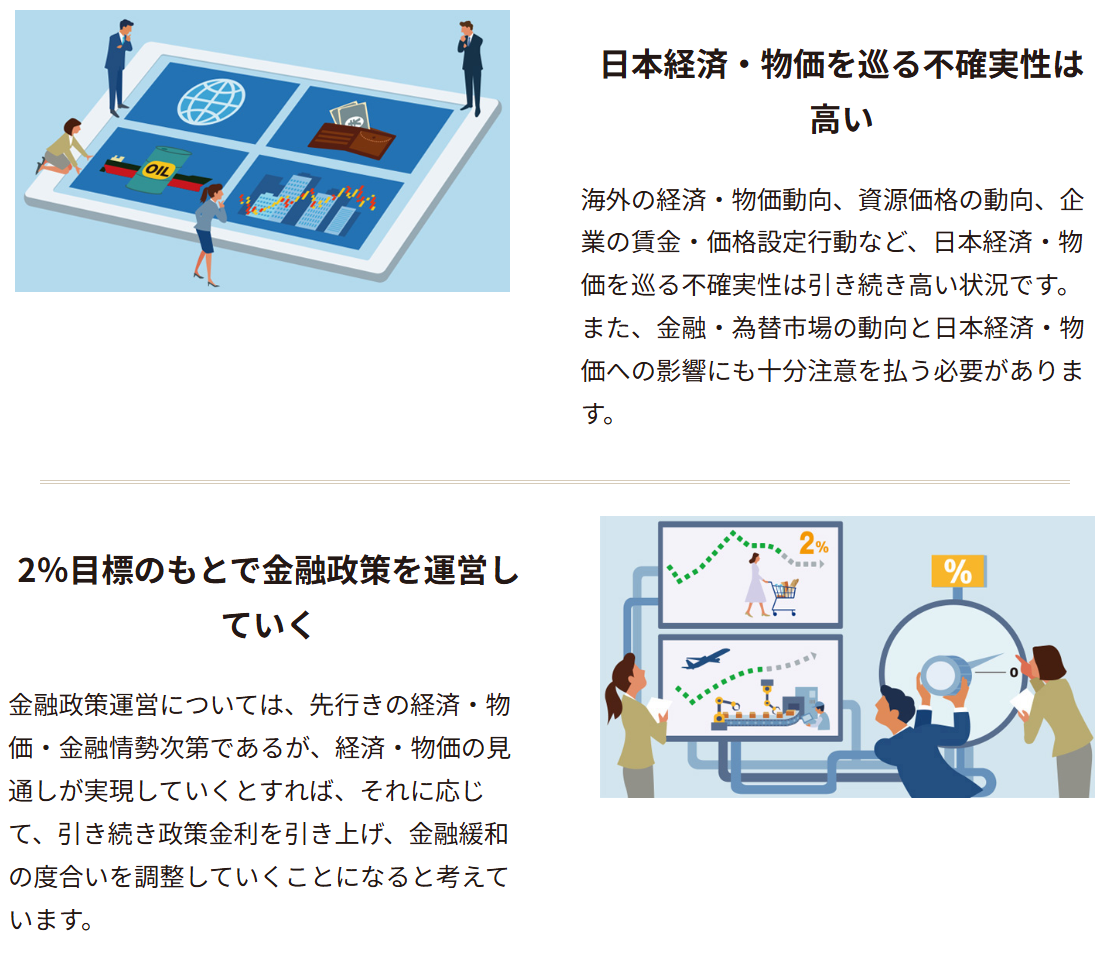
Source: Outlook Report Highlights, October 2024.
Leaving Tokyo and heading to Manila, Bangko Sentral ng Pilipinas with its “MPR Snapshots” offers the public non-technical visual summaries, in addition to its expert-focused monetary policy reports (Figure 4). These are published in four languages: English, Filipino as well as the regional languages Cebuano and Ilokano and seek to make policy decisions relatable to people’s lives.
Figure 4
Excerpt from Bangko Sentral ng Pilipinas’ “MPR Snapshot”
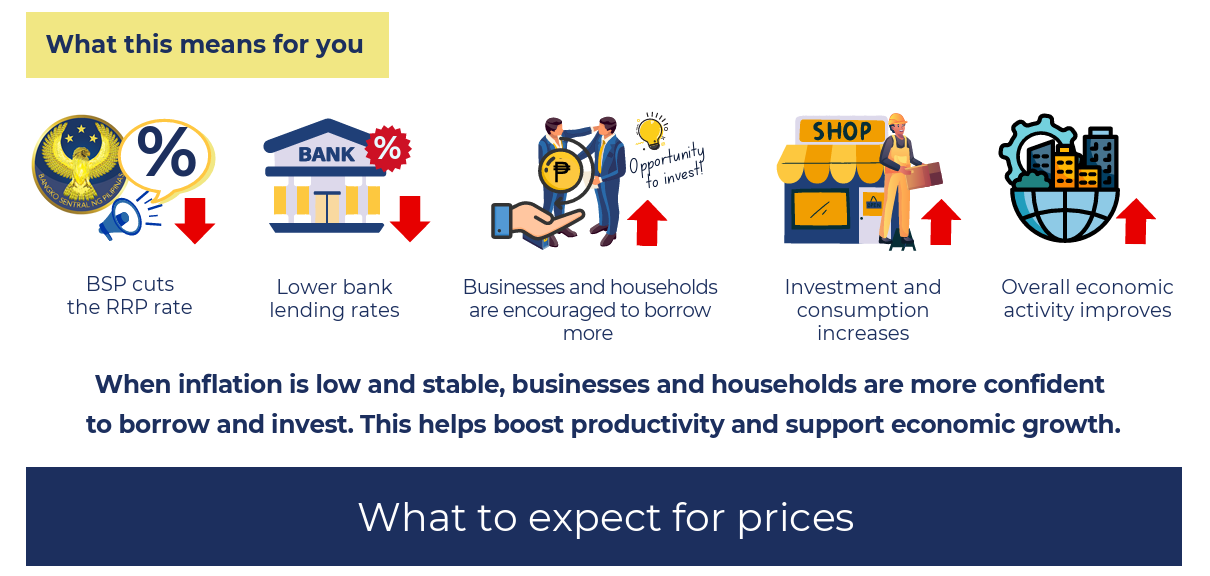
Source: MPR Snapshot, June 2025.
Crossing the equator now, the Reserve Bank of New Zealand in Wellington is one of the pioneers of layered monetary policy communication, combining both text and visuals. Since the introduction in 2018 of its “Monetary Policy Snapshots”, the Bank has dropped the flashy title, but continues to use visuals to explain the local economy. The Bank builds on icons to structure the background material for its quarterly rate decisions (Figure 5). It also offers an interactive chart, which enables readers to follow past rate decisions as well as the future outlook.
Figure 5
Excerpt from the Reserve Bank of New Zealand’s visualised Monetary Policy Statement
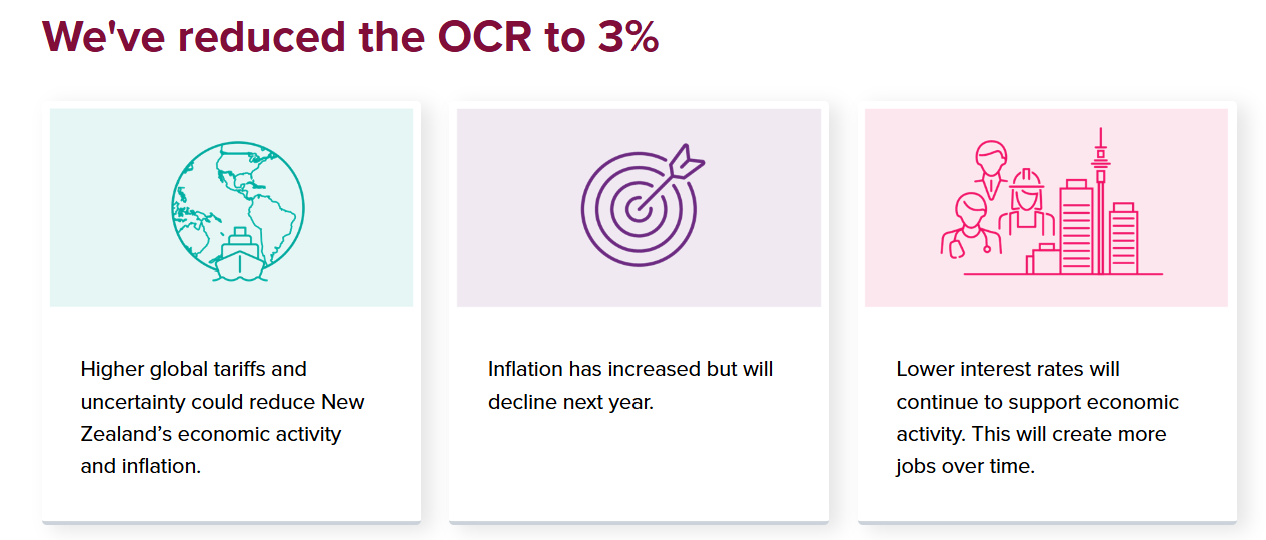
Source: Monetary Policy Statement – August 2025.
Across the Pacific, we see similar approaches, for example by Banco Central de Chile, which has been offering the wider public a snapshot of its Monetary Policy Report since 2022 (Figure 6).
Figure 6
Excerpt from Banco Central de Chile’s Monetary Policy Report Snapshot
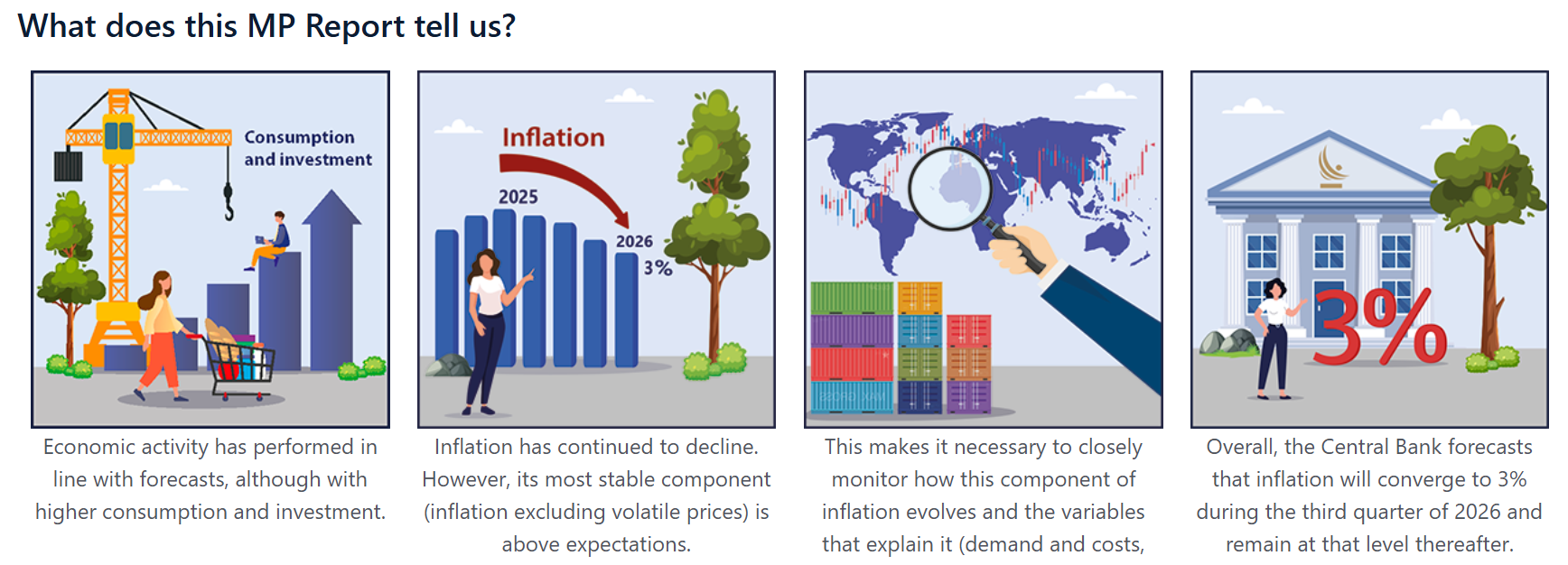
Source: Monetary Policy Report, September 2025.
Banco Central de Paraguay followed suit in 2023 (Figure 7). Both central banks use illustrations paired with plain language to explain economic developments to make the policy decisions easier to grasp for the wider public.
Figure 7
Excerpt from Banco Central de Paraguay’s Informe de Política Monetaria
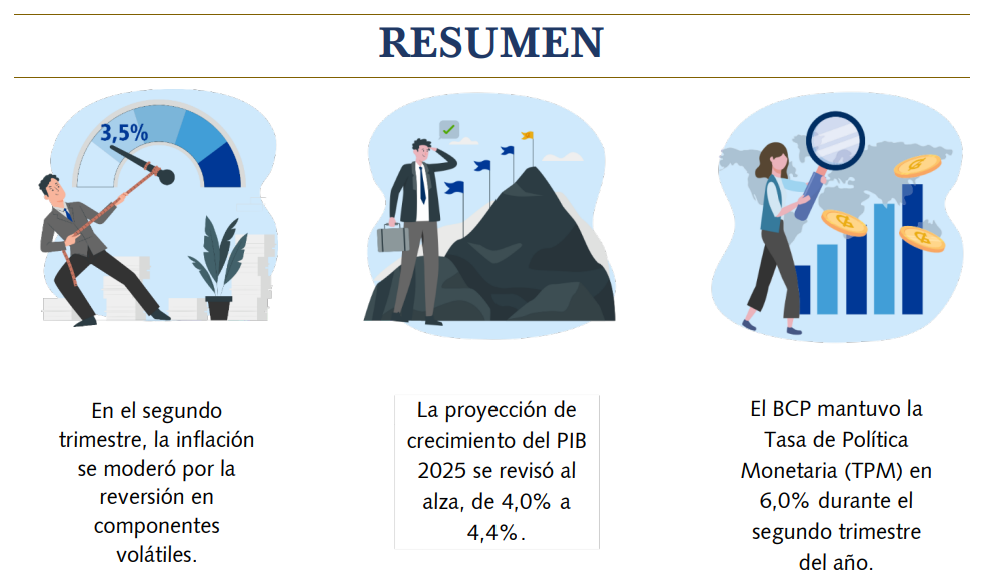
Source: Informe de Política Monetaria, June 2025.
On the North American mainland, visuals play only a minor role in communicating monetary policy. The opposite is true for the Bank of Jamaica. Famous for its creative communications – especially its reggae song about the importance of inflation – the Bank uses videos which are televised by national broadcaster TJ to explain economic developments. The series “Inflation Watch” informs viewers of monthly price movements that influence the Bank of Jamaica’s rate decisions (Figure 8), but it often covers other topics, too, such as payments.
Figure 8
Snippet of the Bank of Jamaica’s “Inflation Watch” video for national television
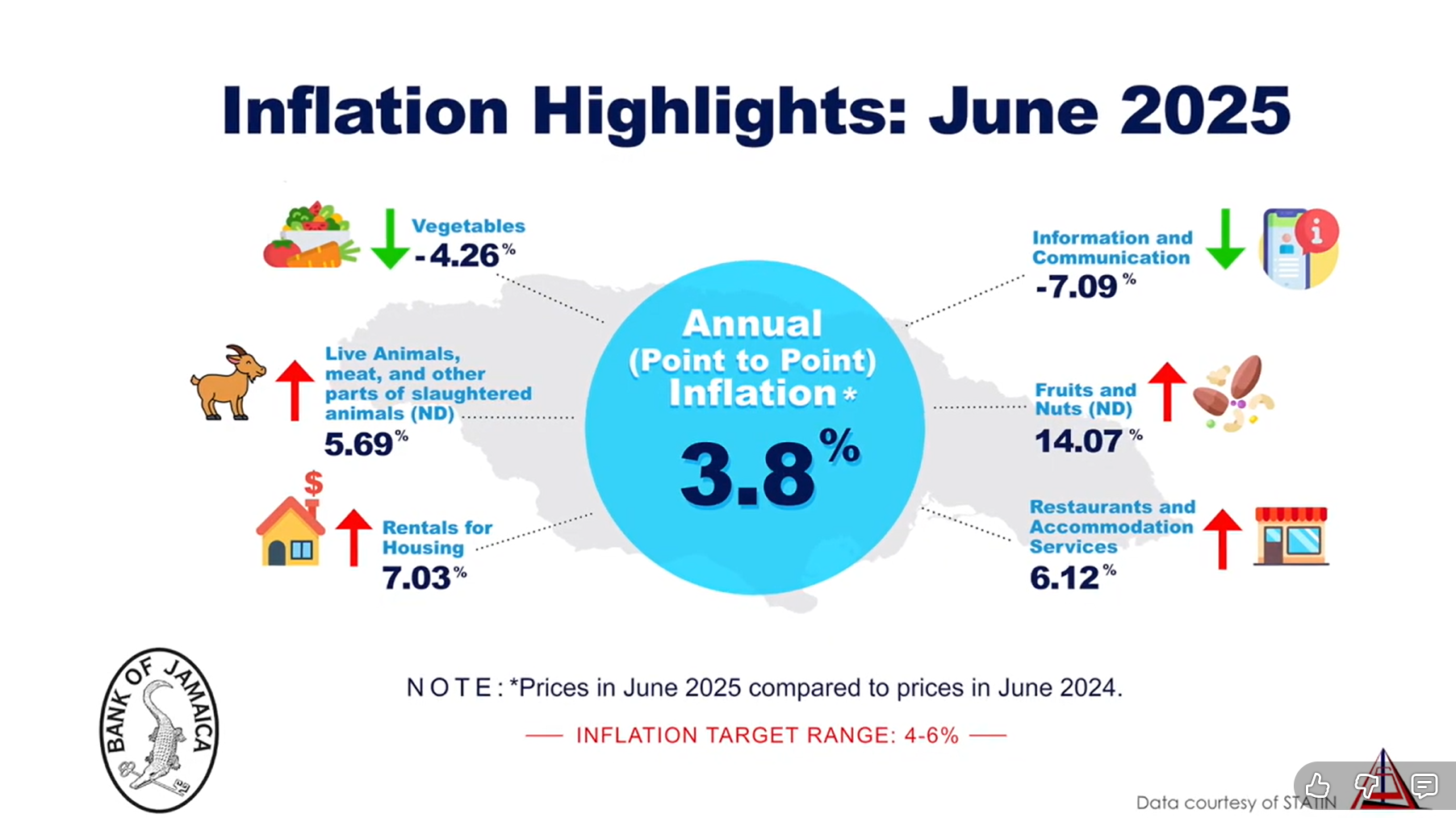
Source: Inflation Watch, June 2025.
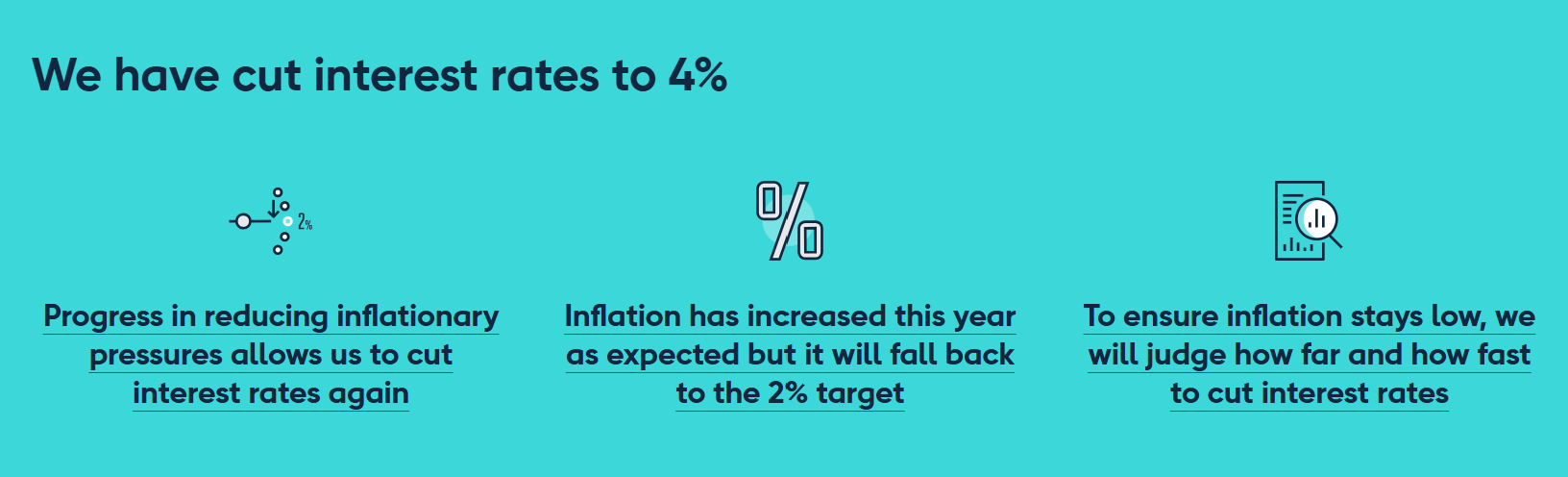
Moving back across the Atlantic to Europe, the Bank of England has been leading the global charge in visual policy communications. The Bank’s trailblazing short visual summaries pair intelligible icons with core messages of its Monetary Policy Report (Figure 9).
Figure 9
Excerpt from the Bank of England’s Monetary Policy Report
Coming to the end of our journey, which naturally could only offer a few glimpes of central banks’ visual communications across the globe, we arrive back home in Frankfurt. The ECB went through a sea change of its policy communication with the 2021 review of its monetary policy strategy. As part of a larger modernisation package, the ECB explicitly committed to offering the wider public “layered and visualised versions of monetary policy communication”. “Our monetary policy statement at a glance” combines intuitive visuals with accessible messages about what the ECB decided and how its sees the economy evolving (Figure 10). It is available in all 24 EU languages. To expand its reach, the ECB and the national central banks of the Eurosystem share it via their websites and social media. While an average of around 1,800 users read the monetary policy statement on the ECB’s website on press conference day, close to 15,000 people use Instagram to access the Governing Council’s decisions.
Figure 10
Excerpt from the ECB’s Visual Monetary Policy Statement
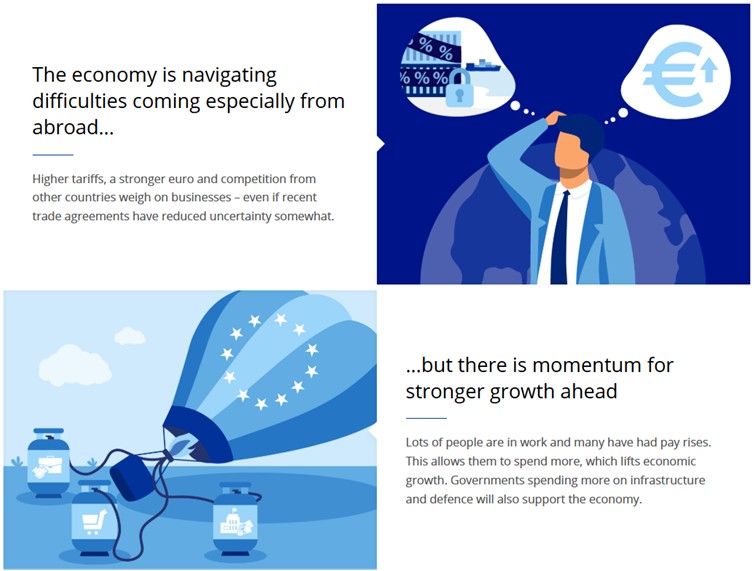
Source: “Our monetary policy statement at a glance”, September 2025.
Clearly, visuals are no guarantee that people will pay attention, or have a lasting understanding of the message. And not everyone is convinced that pictures really help communication – yet. But visual evidence from more and more central banks all over the world points in one direction: it’s time to picture it!
The views expressed in each blog entry are those of the author(s) and do not necessarily represent the views of the European Central Bank and the Eurosystem.
Check out The ECB Blog and subscribe for future posts.
For topics relating to banking supervision, why not have a look at The Supervision Blog?
Legal Disclaimer:
EIN Presswire provides this news content "as is" without warranty of any kind. We do not accept any responsibility or liability for the accuracy, content, images, videos, licenses, completeness, legality, or reliability of the information contained in this article. If you have any complaints or copyright issues related to this article, kindly contact the author above.
